Playcraft Systems · Released playground product
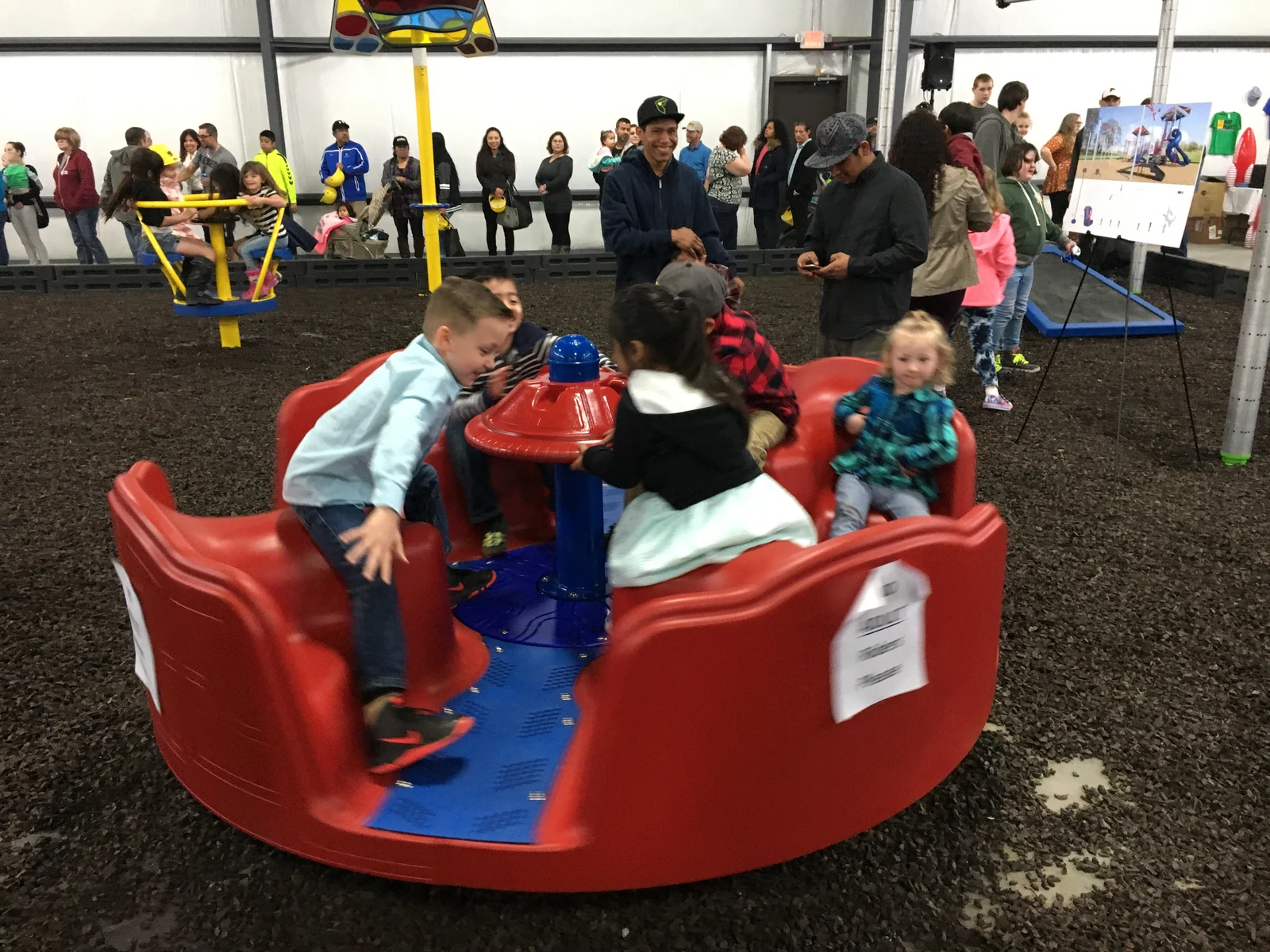
Inclusive Merry-Go-Round
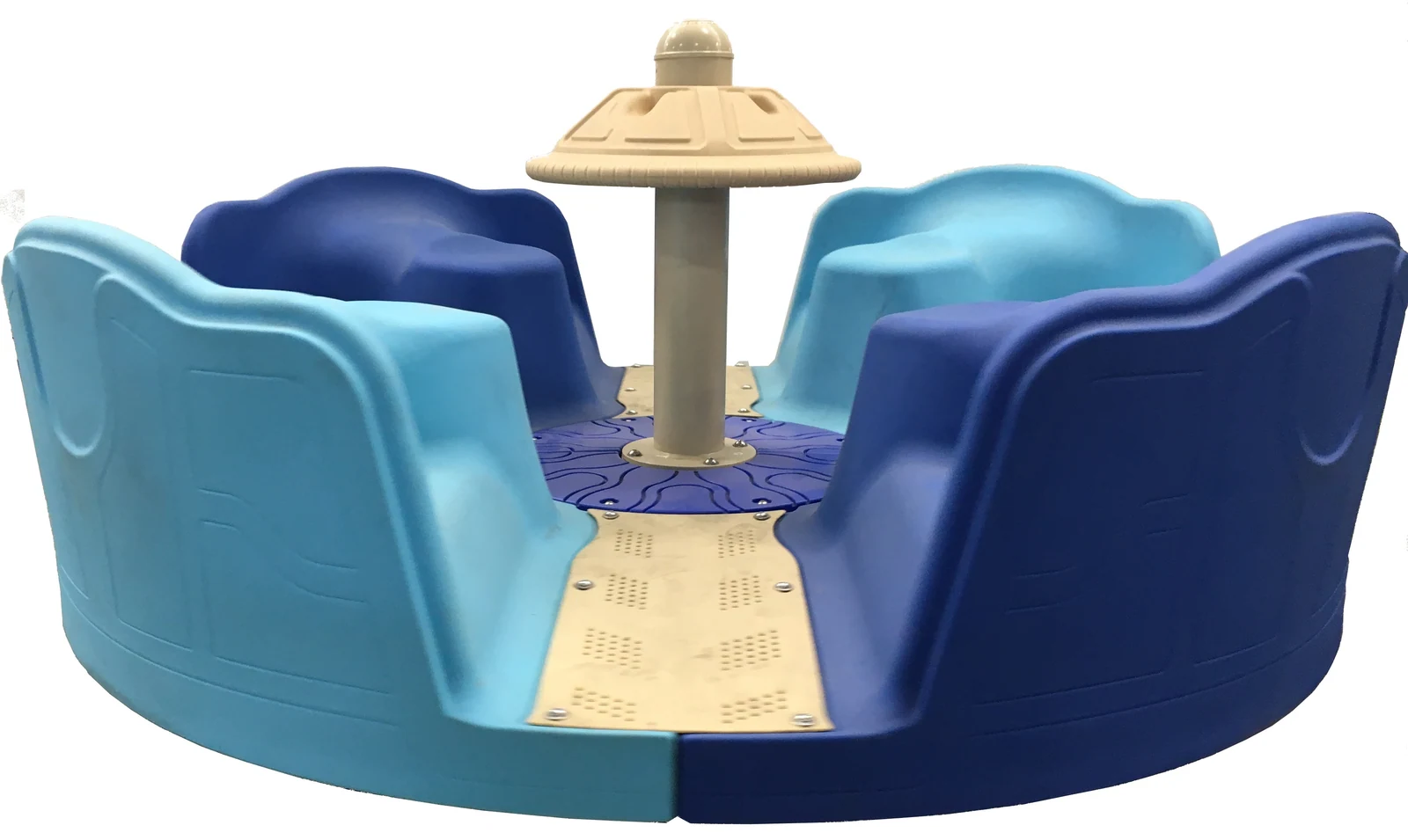
I developed seating, handles, and a supporting structure that broadened participation in a shared spinning playground. A full-scale wood prototype exposed an assembly problem, leading me to compare revised bracket designs, select bracket 02, and validate the assembled structure before release.
- My contribution
- Led seat and handle design, full-scale prototyping, bracket selection, tolerance analysis, and structural validation
- Design challenge
- Broaden participation while resolving the seating geometry, mounting interface, and assembly sequence
- Outcome
- Bracket 02 carried into structural validation; final rotomolded product released and sold worldwide
01 / Development
Designing for shared play
Competitive research informed the seating and interaction direction. The goal was to broaden participation while preserving the open-ended play of a spinning platform.
02 / Development
Developing the seat
Sketches explored the seat opening, backrest, and support geometry before the design moved into a full-scale physical prototype.
Exploring the seat geometry
The full-scale wood prototype
The seat prototype was CNC-machined from wood at 1:1 scale. These unpainted views show the seating surfaces, backrest, and entry opening in a physical form.
The painted prototype and mounting interface
The silver-painted wood prototype made the seat geometry and mounting interface available for physical evaluation and assembly.
03 / Development
Refining the handles
Two CAD renders show the handle development before the final rotomolded handle. The work developed the contact surfaces and their relationship to the central assembly.
04 / Development
Validating the structure
-
01 / Prototype finding
Assembly drove the redesign
The full-scale build exposed the difficulty of the original horizontal bolt arrangement.
-
02 / Compare & select
Bracket 02 carried forward
I compared three revised profiles, keeping each geometry beside its corresponding FEA study.
-
03 / Validate
Check the assembled product
Tolerance analysis and weighted-load tests connected the selected design to physical validation.
The 1:1 prototype showed that the original horizontal bolt arrangement complicated assembly. I developed three revised bracket profiles and used finite element analysis to examine the loaded mounting connections.
I selected bracket 02 for the next stage of development. The tolerance analysis checked the bracket and bearing assembly, and physical weighted-load tests evaluated the bracket and complete product. The studies below connect that choice to the geometry, analysis, and validation work.
Bracket 01
Bracket 02Selected design
Bracket 03
Each simulation retains its original stress legend. The plots support the design comparison; physical load testing is shown separately below the tolerance study.
Checking tolerances
Validating with weighted loads
05 / Development
From play testing to release
Play testing placed the design in the context of actual use. The final rotomolded product was released into the catalog and sold worldwide.